
The Smartest Tools, in the Fewest Hands
AI can now reason, act, and finish real work on its own. Yet most of the world has never touched it. This is the gap that matters, and the one Crux is built to close.
In two years, AI stopped being a novelty. It can reason through a problem step by step, use real tools, and run on its own for hours until a task is actually finished, not just talked about. It is one of the most capable things we have ever built. And almost no one is using it.
The gap nobody is talking about
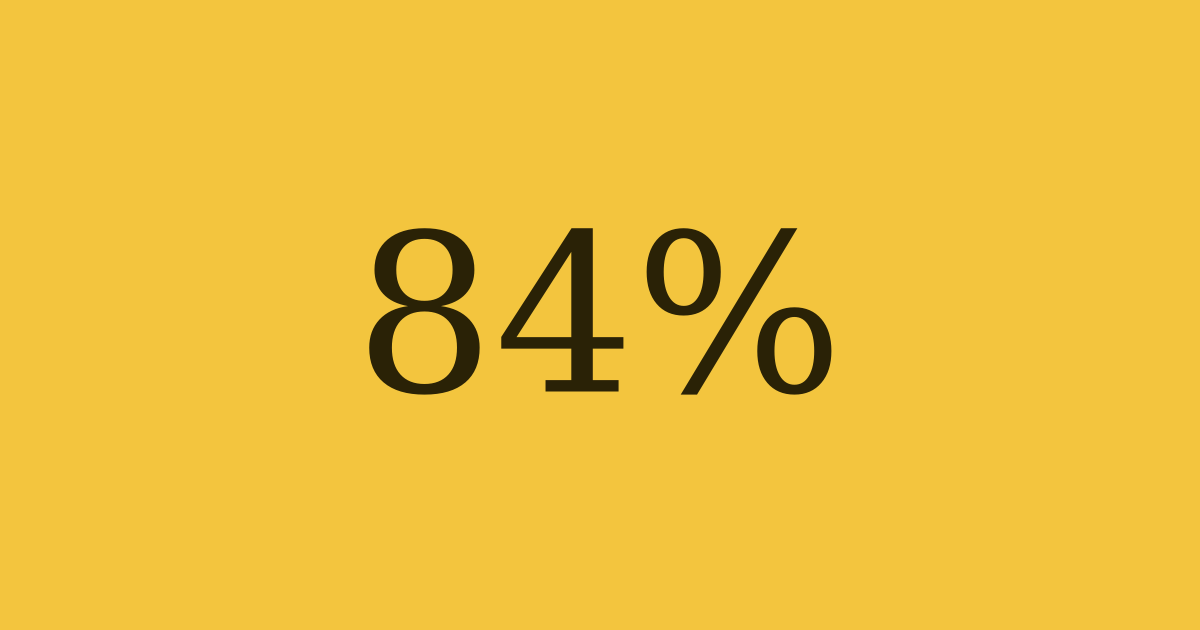
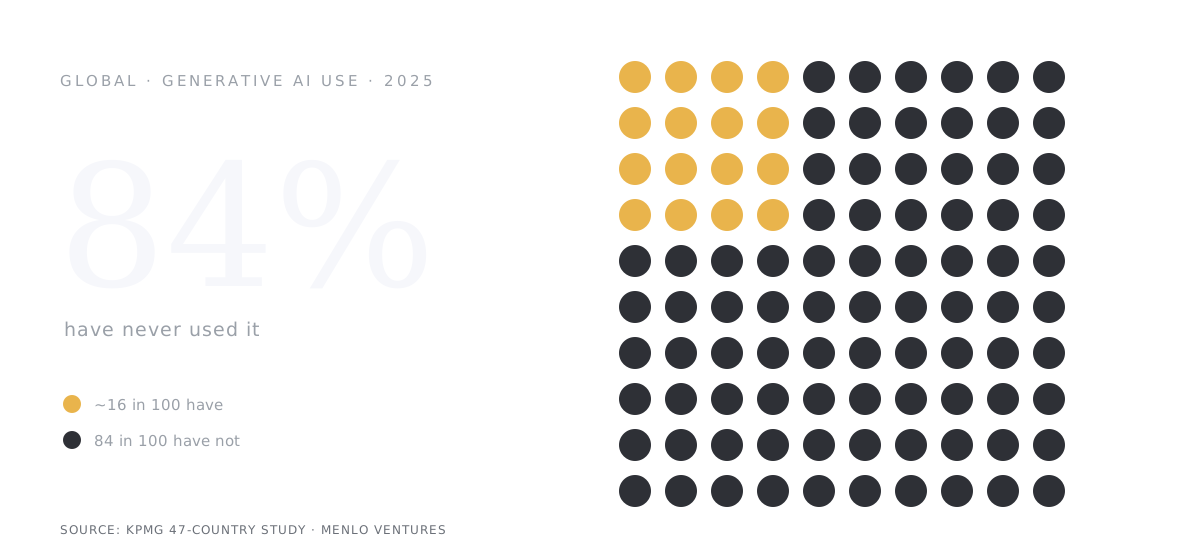
- Around one in six people on Earth has used generative AI at all. The other ~84% never have.
- Even where it looks common, everyday use is thin. In the places where it is most widespread, only about a fifth of adults reach for it daily.
- Agents, the kind that act on their own, are rarer still. Among the most technical people alive, professional software developers, only about one in five use one, and more than half use no agent at all. For everyone outside that world, the number rounds to zero.
Who's inside, and who's left out
The people using AI are not a cross-section of humanity. They skew young, employed, high-earning, and already technical.
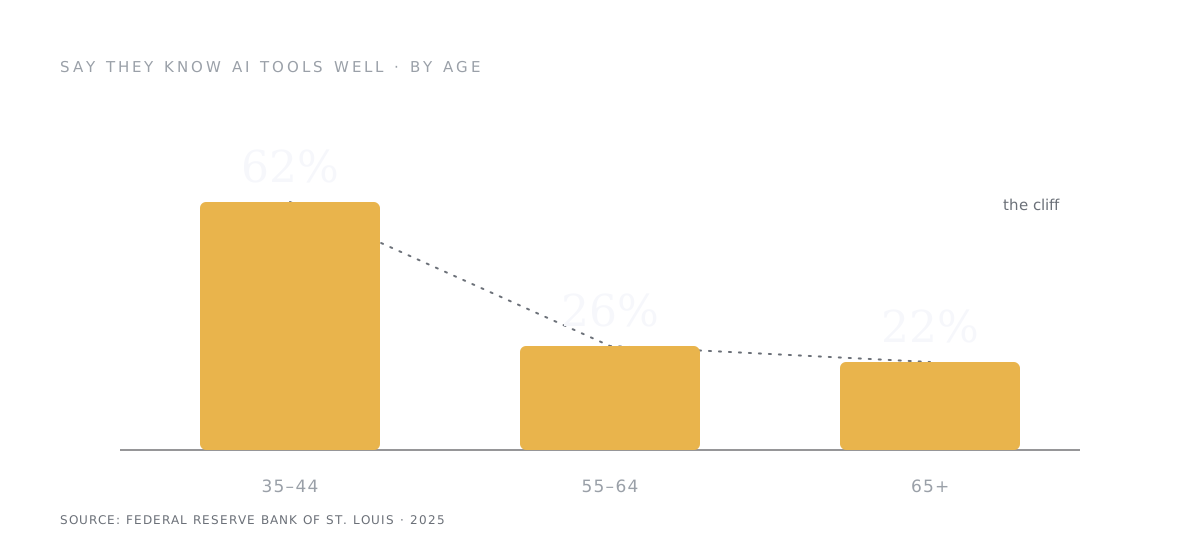
- Familiarity falls off a cliff with age. Around 62% of people in their late thirties say they know these tools well, against roughly 22% of those over 65.
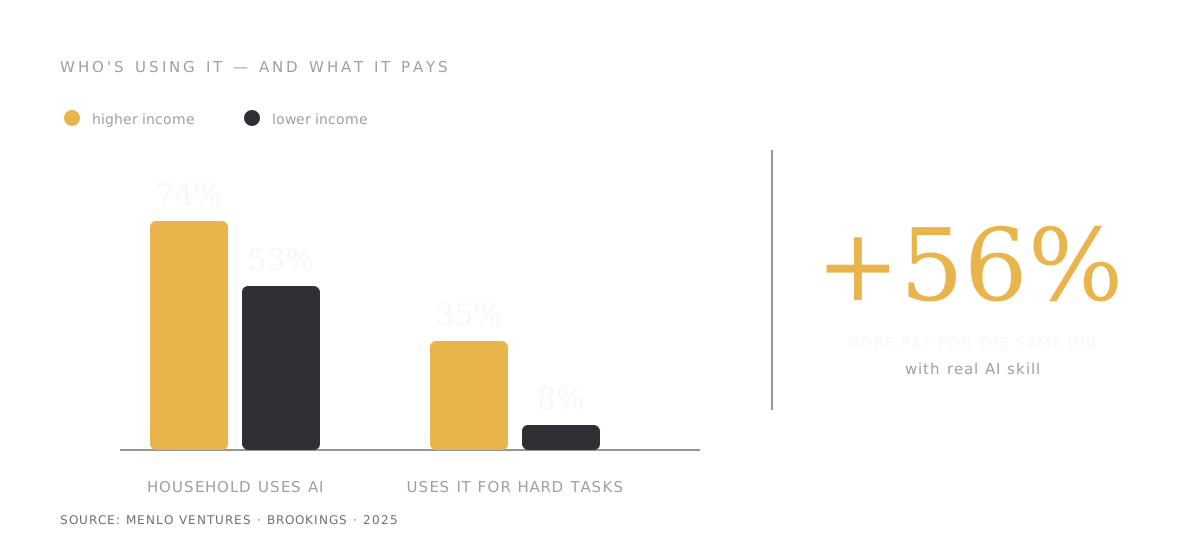
- It tracks income. About three-quarters of higher-income households use AI, versus half of lower-income ones. For the heaviest tasks the split is starker: 35% of top earners against 8% of the lowest.
- Women are roughly 20% less likely than men to use these tools, even in the same jobs.
And the gap pays. Workers with real AI skill earn around 56% more than peers doing the same job without it. The tool that could level the field is instead widening it: the people already ahead are pulling further ahead.
It costs money, and it costs confidence
Part of the wall is price. Among the small share of households that pay for AI at all, only about 2%, the average bill runs near $60 a month across roughly four separate subscriptions, and one in four of them pays over $100.
But most people never get that far. Around 63% say they simply don't see a need for AI in their lives. Many cannot tell what they are even looking at: only about a third of people over 65 feel confident they can tell when they are talking to a machine. When the smartest tools ask you to learn a new language just to begin, most people, reasonably, walk away.
The barrier was never intelligence
None of this is about the technology being too weak. It is about it being out of reach.
- Fewer than half of people worldwide say they trust AI, and trust has fallen as the tools have grown.
- Across dozens of countries, about as many people feel nervous about AI as feel excited.
- Fewer than half have had any guidance or training with it at all.
The assistants are brilliant. They are just built for people who already speak their language, and that leaves out most of the world: anyone for whom a steep learning curve is reason enough never to start.
What we believe the real work is
The hard problem was never making AI smarter. That part matters most, an assistant that can genuinely help you with anything you ask is the whole point. But it is only half of it. The other half is reach: making something this powerful simple enough that anyone can pick it up and use it.
We will be honest with you: we are not there yet. We have worked to make Crux less technical, and we know there is still a long way to go. But this is the part we care about, and we are not going to stop until we get there.
Because the goal is simple, and we mean it plainly: the day our grandparents can use this on their own, without anyone sitting beside them. That is not a nice-to-have. It is the reason we are building. Something this powerful should not stay out of reach, and closing that distance is the work we have given ourselves.
Download Crux and help us close the gap.